Enanismo pituitario canino: razas, causas y prueba de ADN
El enanismo pituitario canino es un trastorno genético poco frecuente causado por una mutación en el gen LHX3 (y en algunas razas en el gen del receptor de GHRH) que impide que la glándula pituitaria produzca hormona del crecimiento. Aparece con mayor frecuencia en el Pastor Alemán, pero también está documentado en el Perro de Osos de Carelia, el Perro Lobo de Saarloos, el Perro Lobo Checoslovaco, el Mastín Tibetano y algunas otras razas. El diagnóstico definitivo se realiza mediante pruebas de ADN, complementadas con niveles de IGF-1 en sangre, pruebas de estimulación de la hormona del crecimiento e imágenes de la pituitaria.
¿Qué es el enanismo pituitario canino?
El enanismo pituitario canino es un trastorno hormonal hereditario en el que la glándula pituitaria no produce suficiente hormona del crecimiento (GH), lo que provoca un retraso en el crecimiento, retención del pelaje de cachorro y una variedad de problemas de salud secundarios. Es una de las formas más comunes de enanismo observadas en perros y es fundamentalmente diferente de la acondroplasia (el enanismo de extremidades cortas asociado a razas como Dachshunds, Corgis y Basset Hounds). En el enanismo pituitario, el esqueleto y las extremidades son proporcionales, pero el perro mantiene tamaño de cachorro durante toda su vida.
La afección se origina en un fallo del desarrollo de la glándula pituitaria. Sin suficiente GH, el hígado no puede producir suficiente factor de crecimiento insulínico tipo 1 (IGF-1), y casi todos los sistemas del cuerpo que dependen de un crecimiento normal se ven afectados. Los cachorros con enanismo pituitario suelen parecer normales al nacer, pero a los 2 o 3 meses de edad son notablemente más pequeños que sus hermanos de camada, desarrollan un pelaje suave y lanoso de cachorro que nunca mudan y, a menudo, presentan pérdida de pelo bilateral (alopecia) a medida que envejecen.
Razas comúnmente afectadas
El enanismo pituitario se ha descrito en decenas de razas, pero ciertas poblaciones portan la mutación con mayor frecuencia:
- Pastor Alemán – la raza más afectada a nivel mundial, originalmente rastreada a una línea alemana en la década de 1940
- Perro de Osos de Carelia – una pequeña raza nórdica de caza en la que la mutación está muy extendida
- Perro Lobo de Saarloos – una raza holandesa híbrida de lobo y perro
- Perro Lobo Checoslovaco – una raza de trabajo derivada del Pastor Alemán y el lobo
- Mastín Tibetano – confirmado en poblaciones de investigación
- Perros tipo Spitz – reportados de forma esporádica, incluyendo en Laikas de Carelia y Laikas Ruso-Europeas
También se han documentado casos aislados en perros mestizos y en líneas emparentadas con el Pastor Alemán.
Causa genética: mutaciones en LHX3 y GHRH-R
Dos mutaciones genéticas distintas causan el enanismo pituitario, dependiendo de la raza:
- Mutación del gen LHX3 (c.545G>A) – un cambio de una sola base en el gen del factor de transcripción homeobox LIM 3. Esta mutación altera el desarrollo pituitario y es la forma más ampliamente estudiada, identificada en Pastores Alemanes, Perros Lobo Checoslovacos, Perros Lobo de Saarloos y Mastines Tibetanos.
- Mutación del gen del receptor de GHRH (GHRHR) (c.264G>A) – una mutación diferente que afecta al receptor de la hormona liberadora de la hormona del crecimiento. Es la forma principal observada en el Perro de Osos de Carelia, y también se ha descrito en ciertas razas pequeñas tipo Spitz.
Ambas mutaciones se heredan de forma autosómica recesiva, lo que significa que un cachorro debe heredar dos copias (una de cada progenitor) para desarrollar la enfermedad. Los portadores (una sola copia) son clínicamente normales pero pueden transmitir el gen a su descendencia.
Cómo se diagnostica el enanismo pituitario
El diagnóstico suele combinar pruebas genéticas con evaluación hormonal y clínica:
- Prueba de ADN (definitiva) – Una muestra de sangre o un hisopo de mejilla enviado a un laboratorio como el de la Universidad de California, Davis (que ofrece la prueba LHX3 de forma comercial para varias razas) o la Universidad de Helsinki (históricamente enfocada en el Perro de Osos de Carelia). Los resultados se emiten como Clear / Carrier / Affected (Libre / Portador / Afectado). Esta prueba identifica la enfermedad antes de que aparezcan los síntomas y es el estándar de referencia para las decisiones de cría.
- Nivel sérico de IGF-1 – Los perros afectados tienen niveles muy bajos de factor de crecimiento insulínico tipo 1, a menudo por debajo de 50 ng/mL. Es un buen marcador de cribado, pero no es definitivo por sí solo.
- Prueba de estimulación de la hormona del crecimiento – Mide la liberación de GH por la pituitaria tras la administración de un agente estimulante (como clonidina o GHRH). Los perros afectados muestran una respuesta plana.
- Diagnóstico por imagen – La resonancia magnética o la tomografía computarizada del cerebro pueden confirmar una pituitaria anormalmente pequeña o quística.
- Historia clínica y familiar – La raza, la comparación con el tamaño de la camada, la retención del pelaje y la alopecia apuntan hacia el diagnóstico.
Convivencia y manejo de los perros afectados
No existe cura para el enanismo pituitario, pero un manejo de por vida puede ampliar la calidad de vida. Los protocolos suelen incluir:
- Hormona del crecimiento porcina (GH porcina) o GH canina recombinante – administrada para reemplazar la hormona ausente
- Levotiroxina – para el hipotiroidismo que casi siempre se desarrolla
- Esterilización (castración o ovariohisterectomía) – previene la cría accidental de perros afectados o portadores
- Protección solar y cuidado de la piel – la piel fina y alopécica se quema con facilidad y es propensa a infecciones
- Monitoreo frecuente de la función renal, la glucosa y los niveles tiroideos
Sin tratamiento, la mayoría de los perros afectados viven solo de 3 a 5 años debido a insuficiencia renal o disfunción inmunitaria. Con cuidados veterinarios constantes, algunos viven considerablemente más, aunque rara vez alcanzan una esperanza de vida canina normal.
Prácticas de cría responsable
Dado que ambas formas de enanismo pituitario canino son autosómicas recesivas, la prueba de ADN del reproductores es la herramienta más eficaz para la prevención. Los criadores deben:
- Analizar a todos los posibles reproductores a través de un laboratorio acreditado
- Evitar los apareamientos Afectado × Afectado o Afectado × Portador
- Idealmente, evitar también los apareamientos Portador × Portador, o solo realizarlos con un análisis extenso del pedigree y seguimiento de la salud
- Compartir los resultados abiertamente con los compradores de cachorros y en las bases de datos de los clubes de raza
Este sencillo paso ha reducido drásticamente la frecuencia de la mutación LHX3 en poblaciones bien monitorizadas como el Perro Lobo de Saarloos y el Perro Lobo Checoslovaco, y sigue siendo la piedra angular de la prevención en cualquier raza donde la mutación haya sido identificada.
Nota relacionada sobre la salud del Shiba Inu
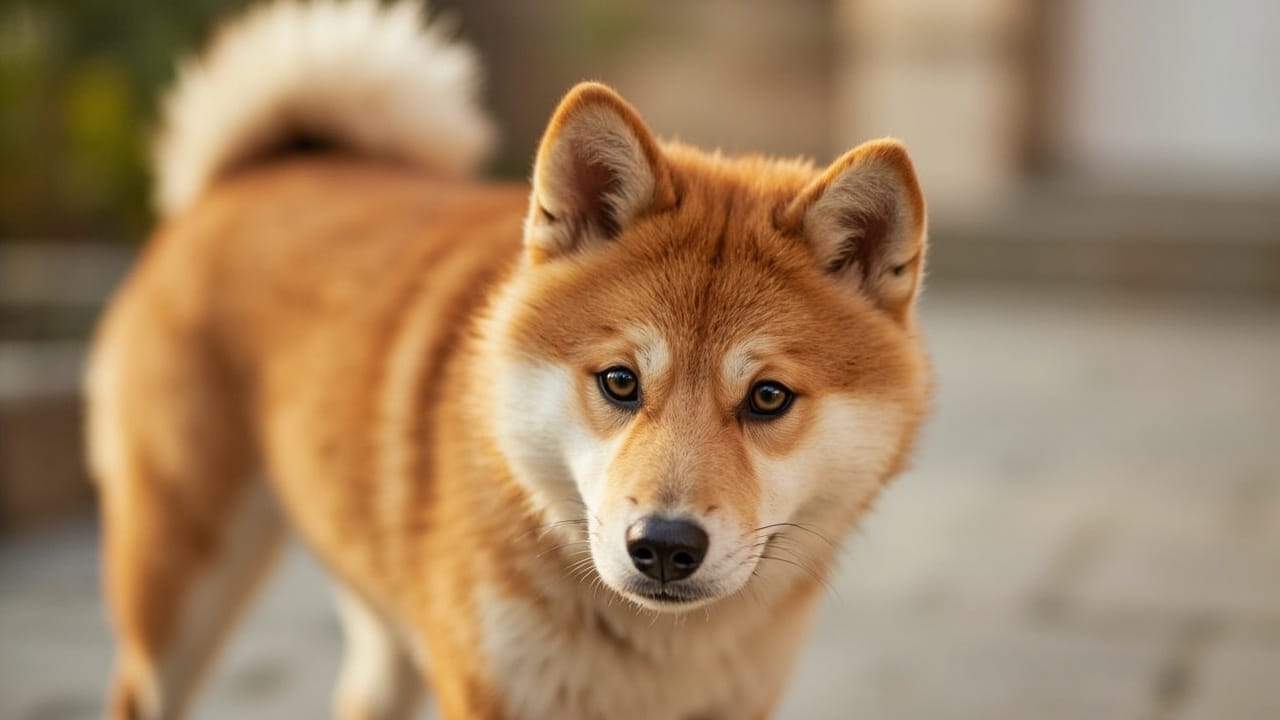
El Shiba Inu no porta las mutaciones de enanismo LHX3 ni GHRHR, y el enanismo pituitario no se considera una preocupación en la raza. Su patrón de crecimiento, pequeño tamaño adulto y las pruebas de salud bien documentadas recomendadas por el club de la raza (OFA de cadera, rótulas y examen ocular ACVO a través del CHIC) no están relacionados con esta condición.
FAQ
¿Is canine pituitary dwarfism painful for the dog?
El enanismo en sí no es doloroso, pero las complicaciones secundarias como el hipotiroidismo, las infecciones cutáneas y la enfermedad renal causan molestias significativas si no se tratan. El reemplazo hormonal de por vida y los cuidados de apoyo mejoran sustancialmente la calidad de vida.
How accurate is the DNA test for canine pituitary dwarfism?
Las pruebas de ADN para las mutaciones LHX3 y GHRHR son muy precisas cuando las realizan laboratorios acreditados. Detectan a los portadores y a los perros afectados antes de que aparezcan los síntomas y se consideran el estándar de referencia para el diagnóstico definitivo y las decisiones de cría.
Can a dwarf dog live a normal life?
Con un tratamiento constante que incluya reemplazo de la hormona del crecimiento, suplementación tiroidea y monitoreo veterinario regular, los perros afectados pueden vivir mucho más allá de la esperanza de vida típica sin tratar de 3-5 años, aunque por lo general no alcanzan una esperanza de vida canina normal completa.
Are Shiba Inu affected by pituitary dwarfism?
No. Las mutaciones LHX3 y GHRHR asociadas al enanismo pituitario no se han identificado en la población de Shiba Inu, y la afección no se reconoce como una preocupación de salud de la raza.
⚕️ This article is researched from the AKC and NIPPO breed standards, OFA/CHIC health data and veterinary sources. It is for general information only and is not a substitute for advice from your own veterinarian.
Sigue leyendo
 Esperanza de vida del Mame Shiba: ¿Viven tanto como los Shibas estándar?
 Enanismo en los Shiba Inu: condición genética frente a cría intencionada de perros pequeños
 ¿Los Shiba miniatura tienen más problemas dentales, articulares y de parto?
 Problemas de salud del Mame y el Shiba miniatura: guía completa