Taille d'une portée de Shiba Inu : combien de chiots dans une portée typique
Une portée typique de Shiba Inu contient en moyenne 3 chiots, avec une fourchette normale de 1 à 6 chiots. La taille de la portée est influencée par l'âge, la santé, la génétique et le moment de la saillie de la mère, les primipares et les femelles plus âgées produisant généralement des portées plus petites.
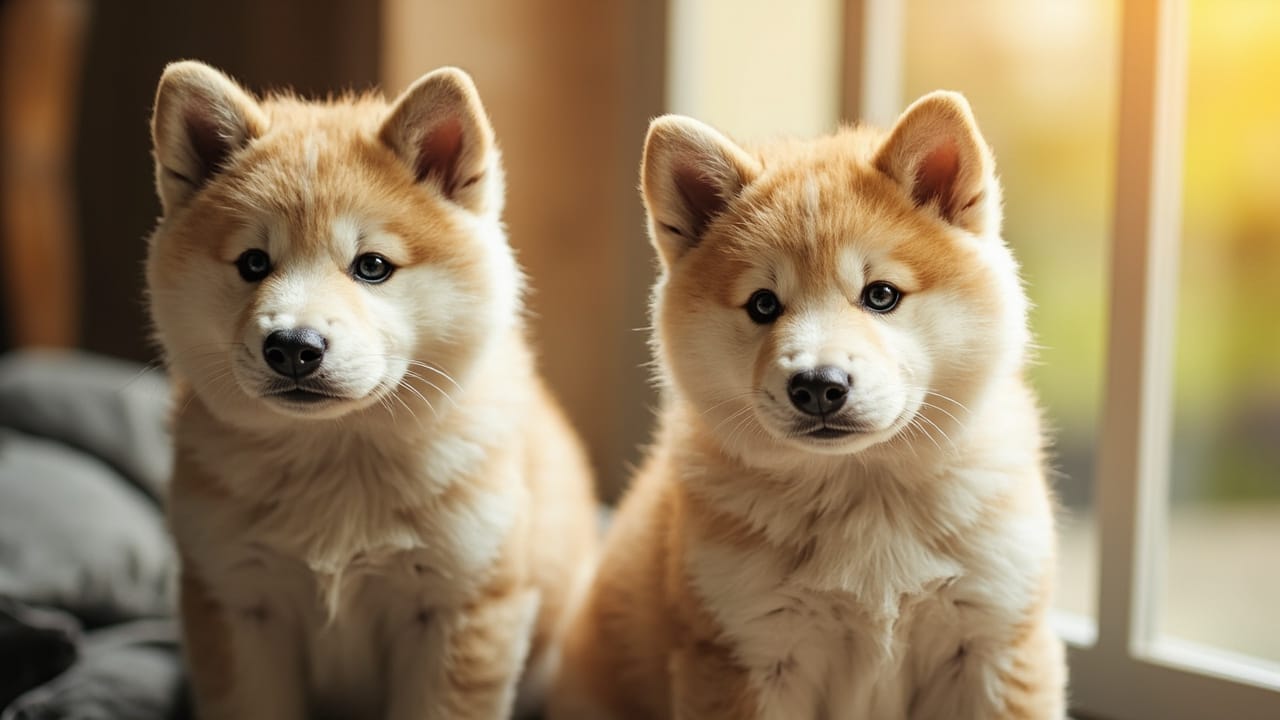
Une portée typique de Shiba Inu contient 3 chiots en moyenne, la plupart des portées se situant entre 1 et 6 chiots. Comme le Shiba Inu est une race spitz petite à moyenne (mâles 35–43 cm, femelles 33–41 cm, environ 8–10 kg), la race n'a tout simplement pas la capacité physique pour les portées plus grandes que l'on observe chez les retrievers ou les bergers. Six est inhabituellement grand pour un Shiba, et les portées d'un seul chiot sont également dans la fourchette normale, en particulier chez les primipares ou les mères plus âgées.
Si vous planifiez un élevage, si vous évaluez une femelle gestante, ou si vous êtes simplement curieux de savoir à quoi vous attendre, voici ce qui détermine réellement la taille d'une portée chez les Shibas — et comment accompagner une gestation en bonne santé.
Quelle est la taille moyenne d'une portée de Shiba Inu ?
La plupart des éleveurs et clubs de race rapportent une moyenne de 3 chiots par portée, avec une fourchette typique de 1 à 6. Les registres des clubs de race japonais et les éleveurs occidentaux convergent de manière constante autour de ce chiffre. Une enquête japonaise des années 1980 et des données plus récentes de clubs de race pointent toutes deux vers environ 2,7–3,4 chiots comme tendance centrale.
Tout ce qui sort de la fourchette 1–6 est peu fréquent mais pas anormal. Des portées de 7 ou 8 chiots surviennent occasionnellement, souvent lorsqu'une jeune femelle d'élevage éprouvée est saillie à une ovulation bien programmée. Des portées d'un seul chiot (portée singleton) se produisent plus souvent qu'on ne le pense, en particulier chez les jeunes chiennes primipares ou chez celles saillies plus tard dans leur vie.
Quels facteurs influencent la taille de la portée chez le Shiba ?
Plusieurs variables déterminent si une portée comptera 1, 3 ou 6 chiots :
- Âge de la mère : La fertilité atteint son pic entre 2 et 5 ans. Les chiennes primipares de moins de 2 ans mettent souvent bas de plus petites premières portées. Les mères de plus de 6–7 ans produisent généralement moins de chiots, et le taux chute plus fortement après 8 ans.
- Santé et condition corporelle : Une mère en forme, à un poids idéal (NEC 4–5/9) conçoit et porte plus facilement. Les femelles maigres et obèses ont des portées réduites et davantage de complications à la mise bas.
- Génétique et pedigree : Certaines lignées produisent régulièrement plus. Les trois lignées japonaises d'origine — Shinshu, Mino et San'in — présentent de subtiles différences de taille de portée moyenne, en partie liées aux goulots d'étranglement historiques après la Seconde Guerre mondiale.
- Moment de la saillie : Le dosage de la progestérone ou un test LH réalisé sur place pour cibler l'ovulation est le facteur contrôlable le plus important. Une saillie effectuée aux mauvais jours réduit considérablement le taux de conception et la taille de la portée.
- Qualité de la semence et fertilité de l'étalon : Une analyse de sperme avant la saillie permet d'écarter une mobilité ou une morphologie insuffisante, ce qui réduit directement la taille de la portée.
- Parité de la portée : Les deuxièmes et troisièmes portées sont souvent légèrement plus grandes que la première.
Comment savoir si votre Shiba est gestante — et combien de chiots attendre
Vers le 28e–30e jour, une échographie abdominale peut confirmer la gestation. L'échographie confirme la viabilité, mais n'est pas fiable pour un compte exact. Pour un décompte précis, prévoyez une radiographie (rayons X) à 55 jours et plus, une fois les squelettes fœtaux minéralisés. Votre vétérinaire peut généralement donner un compte à ±1 chiot à ce stade.
Un abdomen détendu, des mamelons agrandis et un écoulement clair ou laiteux au cours des deux dernières semaines sont de bons signes cliniques. Une chute soudaine d'appétit vers le 45e jour peut simplement refléter la compression due à un utérus plein — ce n'est pas nécessairement un problème, en particulier avec de grandes portées.
Préparer la mise bas
Même une petite portée de Shiba mérite une mise bas planifiée. Installez une caisse de mise bas vers le 55e jour dans une pièce calme, sans courants d'air, avec une température d'environ 24–26 °C (75–79 °F) pendant les deux premières semaines. Ayez sous la main :
- Une balance de cuisine numérique (précise au gramme) pour peser les chiots à la naissance et chaque jour pendant les deux premières semaines
- Une poire d'aspiration et des serviettes propres pour dégager les voies respiratoires
- Gluconate de calcium et ocytocine uniquement sous contrôle vétérinaire
- Une couveuse pour chiots ou un tapis chauffant réglé au minimum avec une couche tampon
- Le contact du vétérinaire d'urgence et un vétérinaire de relève qui pratique les césariennes en dehors des heures ouvrées
Les Shibas sont généralement des chiennes robustes et bonnes nourrices, mais la race est aussi sujette à quelques problèmes qu'il convient de dépister dans toute portée planifiée — au minimum radiographies des hanches OFA, évaluation des rotules et un examen ophtalmologique CERF/CAER pour répondre aux recommandations du CHIC.
Quand les portées plus petites ou plus grandes sont préoccupantes
Une portée d'un seul chiot n'est pas une catastrophe, mais les singletons grandissent souvent davantage in utero et peuvent nécessiter une césarienne planifiée. Les chiots de petites portées manquent aussi de la compétition qui apprend l'inhibition de la morsure ; l'éleveur doit donc surveiller attentivement la socialisation précoce.
Les portées plus grandes que la moyenne (6 et plus) augmentent le risque de syndrome du chiot fading, d'hypocalcémie chez la mère (en particulier chez les petites races), et la nécessité d'un allaitement complémentaire. Pesez les chiots deux fois par jour pendant les 10 premiers jours — tout chiot qui ne prend pas de poids nécessite une intervention rapide.
Des attentes réalistes aident : comptez 3, espérez 5, et préparez-vous à l'éventuelle surprise d'un singleton.
Questions connexes que se posent les éleveurs de Shiba
Combien de temps dure la gestation chez le Shiba Inu ? La période de gestation est de 63 jours à partir de l'ovulation (et non à partir de la date de saillie). En comptant à partir de la première saillie, on obtient généralement une fenêtre de 59–65 jours.
À quel moment un Shiba Inu peut-il être gestant ? Les femelles ont généralement leurs premières chaleurs entre 6 et 12 mois, mais la reproduction n'est pas recommandée avant 2 ans ou au plus tôt à partir des deuxièmes chaleurs, une fois les dépistages de santé effectués.
Combien coûtent les chiots Shiba Inu ? Chez un éleveur réputé, comptez 1 400 à 2 500 $ pour un chiot de compagnie, 3 500 à 5 000 $ pour un chiot d'exposition ou d'élevage, et environ 300 $ auprès d'un refuge de la race.
Combien de portées un Shiba Inu peut-il avoir au cours de sa vie ? Sur le plan éthique, pas plus de 3 à 4 portées au total, en laissant au moins un cycle de chaleurs entre chaque gestation. La plupart des éleveurs responsables retirent la reproduction d'une mère vers l'âge de 6 ans.
FAQ
How many puppies do Shiba Inus have the first time?
Les mères Shiba Inu primipares (jeunes chiennes) mettent généralement bas 1 à 3 chiots, souvent dans la partie basse de la fourchette 1 à 6 de la race. Les premières portées plus petites sont courantes chez les petites races de type spitz.
Can a Shiba Inu have 7 or 8 puppies?
Oui, mais c'est peu fréquent. La plupart des portées de Shiba atteignent au maximum 6 chiots. Les portées de 7 à 8 chiots s'observent généralement chez des mères plus jeunes et expérimentées, saillies sur une ovulation précisément programmée, et nécessitent un soutien supplémentaire à la mise bas.
How long is a Shiba Inu pregnant?
Environ 63 jours à partir de l'ovulation, ou environ 59 à 65 jours à partir de la première saillie. Le décompte à partir de l'ovulation donne la date de mise bas la plus précise.
At what age can a Shiba Inu get pregnant?
Les femelles atteignent généralement la maturité sexuelle entre 6 et 12 mois, mais les éleveurs responsables attendent au moins 2 ans — et seulement après avoir passé les examens des hanches OFA, des rotules et un examen ophtalmologique CERF/CAER — avant de les faire reproduire.
Continuer la lecture
 À quel âge les femelles Shiba Inu entrent-elles en chaleur ? Âge, signes et cycle
 Le cycle de chaleurs du Shiba Inu : les 4 étapes que tout propriétaire doit connaître
 Calendrier de gestation du Shiba Inu : guide semaine par semaine
 Mise bas et élevage d'une portée de Shiba Inu : guide complet pour éleveurs