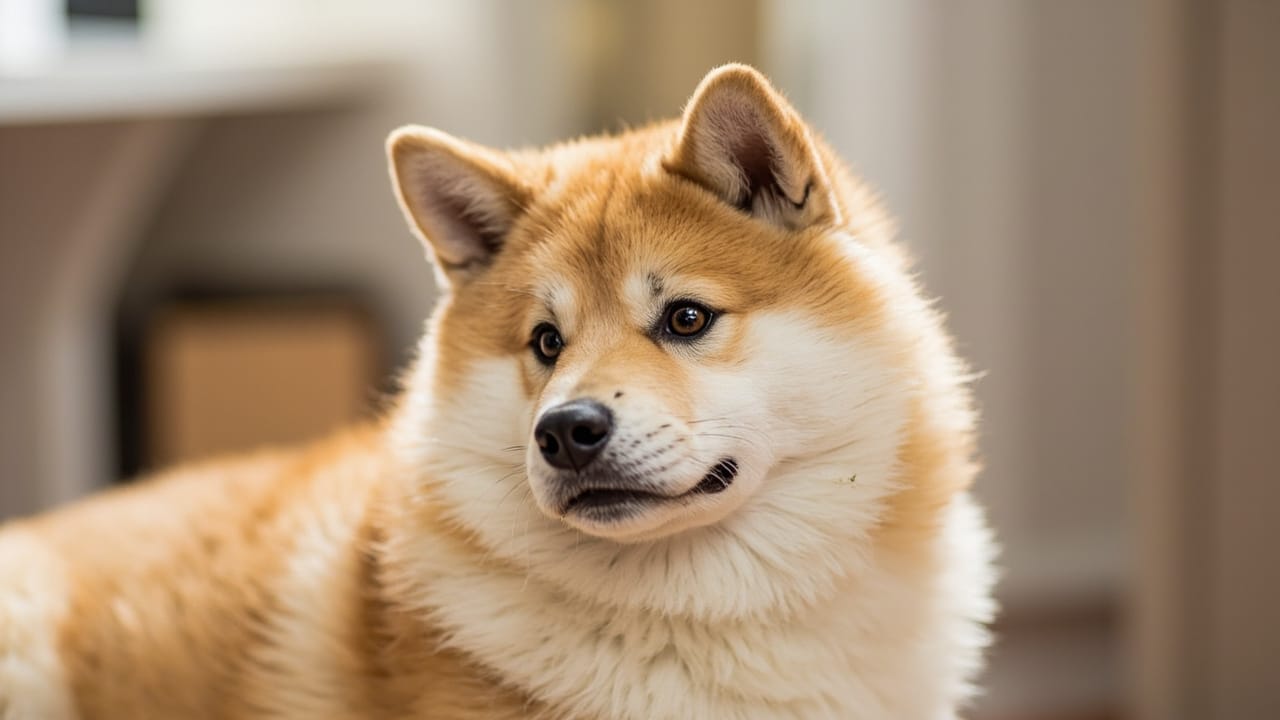
Omgaan met verlatingsangst bij een Shiba Inu
Shiba Inu's zijn een onafhankelijk ras, maar kunnen toch verlatingsangst ontwikkelen. De oplossing is een consistent desensibilisatieprogramma: korte afwezigheden die geleidelijk langer worden, geen dramatische afscheidsrituelen, veel beweging voor vertrek en op beloning gebaseerde bench- of mat-training. De meeste gevallen verbeteren binnen 4–8 weken; ernstige gevallen hebben een dierenarts of veterinaire gedragstherapeut nodig.

Shiba Inu's staan erom bekend afstandelijk en katachtig te zijn, wat veel eigenaren misleidt in de veronderstelling dat verlatingsangst hen niet kan raken. Dat kan wel. Een Shiba is een diep gehechte gezelschapsdier, en elke hond die lange tijd alleen wordt gelaten, wordt blootgesteld aan plotselinge routineveranderingen, of te weinig beweging krijgt, kan echte verlatingsstress ontwikkelen. Het goede nieuws: Shiba's reageren buitengewoon goed op gestructureerde, op beloning gebaseerde training, en de meeste milde tot matige gevallen zijn binnen vier tot acht weken opgelost.
Hoe verlatingsangst eruitziet bij een Shiba
Wacht niet op gescheurd pleisterwerk. Shiba-angst uit zich vaak subtiel:
- De Shiba-schreeuw wanneer je sleutels pakt of schoenen aantrekt
- Ijsberen, lippen likken of naar achteren getrokken oren terwijl je weggaat
- Vernielzuchtig kauwen gericht op deurkozijnen, ramen of jouw schoenen (voorwerpen die naar jou ruiken)
- Plassen of ontlasten binnenshuis bij een hond die eerder zindelijk was
- Overmatige vocalisatie — buren die melden dat er binnen enkele minuten na jouw vertrek wordt geblaf of gehuild
- Zelfverwonding — gebroken nagels, gesneden voetzolen, hotspots door wild rondjes draaien
Eén voorval betekent niet dat je een probleem hebt. Een patroon over twee weken of meer wel.
De basis: beweging, verrijking, onafhankelijkheid
Shiba's werden gefokt om solo te jagen in bergachtig terrein. Paradoxaal genoeg raakt een hond die is bedraad voor onafhankelijkheid nog steeds in paniek wanneer zijn routine instort. Stabiliseer eerst de basis:
- Twee stevige wandelingen per dag, elk 30–45 minuten. Een vermoeide Shiba is een kalme Shiba. Meng er veilig losloopsnuiftijd doorheen indien mogelijk.
- Work-out voor vertrek. Een snuifwandeling van 20 minuten of een flirt-pole-sessie vlak voor je weggaat, verlaagt de basisstress merkbaar.
- Voedsel-verrijking. Kongs, toppls, snuffelmatten, bevroren likmatten. Mentale arbeid put het ras sneller uit dan fysieke arbeid.
- Leer onafhankelijkheid vanaf dag één. Plaatsgebonden training (ga naar je mat, blijf daar, word beloond) bouwt de spier die jouw Shiba nodig heeft om alleen tot rust te komen.
- Bench-training op de juiste manier. De meeste Shiba's zijn schitterend in hun bench als die positief is. Gebruik hem nooit als straf.
Het desensibilisatieprotocol (stap voor stap)
Dit is de echte oplossing. Reken op 6–10 weken consistentie.
- Staags je vertrekgebaren op. Pak sleutels, trek schoenen aan, pak je tas — maar ga niet weg. Ga weer zitten. Herhaal tot je Shiba gaapt en weggaat. Je hebt de trigger gedood.
- Begin afwezigheden in seconden, niet minuten. Stap 5 seconden naar buiten, kom terug, beloon kalm. Geen feest, geen "goed zo!"-explosie. Herhaal tot 5 seconden saai is.
- Bouw de duur langzaam op. 5s → 30s → 1 min → 2 min → 5 min → 15 min → 30 min → 1 uur → 2 uur. Ga pas naar het volgende niveau als het huidige niveau nul stresssignalen oplevert. Reken op plateaus.
- Varieer je vertrek en terugkomst. Andere schoenen, andere deur, ander tijdstip. Voorspelbare vertrekken zijn waar de hond bang voor is.
- Neem jezelf op. Een goedkope huisdiercamera vertelt je precies bij welke duur het gejank begint, zodat je onder die drempel kunt trainen.
- Negeer bij terugkomst. Geen oogcontact, niet praten, niet aaien gedurende 2–3 minuten. Begroet pas wanneer je Shiba kalm is. Dit is niet onderhandelbaar.
Veelgemaakte fouten die het erger maken
- Vernieling achteraf straffen. De hond kan de straf niet koppelen aan de angst, en je maakt toekomstige afwezigheden erger.
- Een tweede hond nemen als oplossing. Het kan helpen bij milde gevallen, maar het doet vaak niets omdat de band met jou is, niet met eenzaamheid in het algemeen.
- Anti-blafbanden of strafbenches. Deze bevestigen in het hoofd van de hond dat jouw afwezigheid angstaanjagend is, en ze verergeren het gedrag.
- Inconsistent schema. Shiba's zijn gewoontedieren. Willekeurige gaten van 3 uur en 8 uur verstoren de trainingscurve.
Wanneer je een professional moet inschakelen
Als je Shiba zichzelf verwondt, door benches breekt, of na 6 weken solide werk geen enkele vooruitgang vertoont, escaleer dan:
- Jouw dierenarts — sluit medische oorzaken uit (urineweginfectie, GI-pijn, cognitieve achteruitgang bij oudere honden) en bespreek kortdurende medicatie. Medicijnen zoals fluoxetine of clomipramine, gecombineerd met gedragsmodificatie, hebben sterke ondersteuning.
- Een veterinaire gedragstherapeut (DACVB) — de gouden standaard.
- Een gecertificeerde verlatingsangst-trainer (CSAT) — voor het gestructureerde programma dat de meeste algemene trainers niet draaien.
De levensduur van een Shiba Inu is 13–16 jaar, een lange tijd om te leven met een hond in paniek. Pak het vroeg aan, wees meedogenloos consequent, en de onafhankelijke, waardige metgezel die het ras behoort te zijn, keert snel terug.
Snelle referentie-checklist
- Twee dagelijkse beweegsessies
- Bevroren Kong of toppl bij elk vertrek
- Trigger-desensibilisatie dagelijks (10 minuten)
- Logboek van afwezigheidsduur
- Geen dramatische hallo's of afscheidsrituelen
- Dierenartsbezoek bij geen vooruitgang na 6 weken
FAQ
Zijn Shiba Inu's vatbaar voor verlatingsangst?
Ja. Ondanks hun onafhankelijke reputatie hechten Shiba's zich sterk aan hun primaire persoon en kunnen ze echte verlatingsstress ontwikkelen, vooral bij plotselinge routineveranderingen, lange alleenuren, of onvoldoende dagelijkse beweging en verrijking.
Hoe lang kan een Shiba Inu alleen worden gelaten?
De meeste volwassen Shiba's redden 4–6 uur comfortabel als ze vooraf beweging hebben gehad en verrijking krijgen. Puppy's mogen niet langer dan 2–3 uur alleen worden gelaten. Meer dan 8 uur regelmatig verhoogt het risico op verlatingsangst en zindelijkheidsproblemen.
Moet ik mijn Shiba in een bench doen om verlatingsangst te stoppen?
Alleen als de bench al een positieve, getrainde ruimte is. Een gestreste Shiba forceren in een bench kan de angst verergeren en letsel riskeren. De meeste gedragstherapeuten geven de voorkeur aan mattraining in een kleine, hondenveilige kamer, of een goed geïntroduceerde bench, gecombineerd met een desensibilisatieprogramma.
Helpt een tweede hond bij verlatingsangst van een Shiba?
Soms, bij milde gevallen. Het helpt niet wanneer de hond hyper-gehecht is aan een specifiek persoon, en Shiba's negeren of ergeren zich vaak aan een niet-verwante huisgenoot. Beschouw het als een mogelijke bonus, niet als een oplossing; voer het volledige gedragsprogramma hoe dan ook uit.